
Porsche - The Perfectionist's Supercar
Published by Napa Valley Supercars | Napa Valley, California
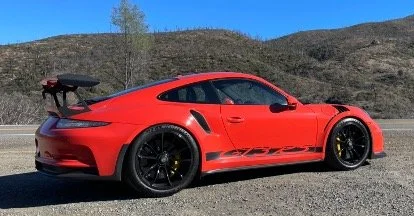
Most car manufacturers build fast cars. A handful build great ones. Porsche builds the same great one, over and over again, for seventy-five years — and somehow makes it better every single time.
That sounds like a criticism. It isn't. It's arguably the most impressive thing any manufacturer has ever done.
The 911 has looked more or less the same since 1963. Rear engine, rear-wheel drive, two doors, that unmistakable silhouette. By every conventional engineering logic, it should have been abandoned decades ago — the rear-engine layout creates handling challenges that front- or mid-engine cars simply don't have. Early 911s were genuinely tricky to drive fast, with a tendency to snap into oversteer that caught out even experienced drivers.
Porsche's response wasn't to move the engine. It was to spend sixty years engineering around the problem so thoroughly that the 911 is now widely considered the most perfectly balanced driver's car ever made. The quirk became the character. The challenge became the mastery.
That stubbornness — that absolute refusal to take the easier path — is what Porsche is about.
Stuttgart, Germany, 1948
Ferdinand Porsche had been one of Europe's most celebrated automotive engineers long before his name appeared on a car. He designed the original Volkswagen Beetle in the 1930s, worked on Auto Union Grand Prix cars, and had been consulted by manufacturers across the continent. His son, Ferry Porsche, founded the car company that bore the family name in 1948 in Gmünd, Austria, before moving operations to Stuttgart-Zuffenhausen in Germany.
The first Porsche — the 356 — was built largely from Volkswagen components, assembled by hand in a small workshop. It was light, nimble, and handled beautifully. It established immediately what a Porsche was supposed to feel like: not the most powerful car in the room, but the most connected. The one that communicated most honestly with the driver.
The 911 followed in 1963, designed by Ferdinand "Butzi" Porsche (Ferry's son), and it defined everything that came after. Over the decades Porsche added turbocharged variants, convertibles, all-wheel drive systems, and eventually an entire family of models — the Boxster, Cayman, Cayenne, Macan, Panamera — but the 911 remained the soul of the company. The one everything else was measured against.
Racing as a Laboratory
Like Ferrari and McLaren, Porsche's road cars and racing programs are inseparable. But Porsche's approach to motorsport has always been distinctive — less about Formula 1 glamour, more about endurance and engineering endurance.
Porsche is the most successful manufacturer in the history of the Le Mans 24 Hours, one of motorsport's most gruelling events. Winning Le Mans requires not just speed but reliability, efficiency, and strategy across an entire day and night of racing. It's a different kind of excellence to the explosive sprint of F1 — and it maps perfectly onto what Porsche builds into its road cars.
The lessons from Le Mans flow directly into every 911: thermal management, drivetrain durability, tyre behaviour over long stints, braking performance that doesn't fade under sustained load. When you drive a Porsche hard for hours, it doesn't deteriorate. It just keeps working.
The GT3 RS: As Close to a Race Car as the Road Allows
Within the 911 family, the GT3 RS sits at the extreme end — the variant developed directly by Porsche Motorsport, the same division that builds the company's racing cars.
The "RS" designation — Rennsport, meaning "motorsport" in German — has been attached to Porsche's most focused, most uncompromising models since 1967. An RS isn't a luxurious 911 with a bigger engine. It's a driver's tool, stripped of excess, tuned for precision.
The current GT3 RS is powered by a 4.0-litre naturally aspirated flat-six engine producing 500 horsepower at a screaming 8,250 rpm. That redline — the point at which the engine reaches its peak power — is extraordinarily high for a road car. Most turbocharged engines make their power low in the rev range and taper off. The GT3 RS builds and builds, the flat-six howling harder and harder the further you push it, until it hits that 8,250 rpm ceiling with a ferocity that's almost shocking.
Paired with Porsche's seven-speed PDK dual-clutch transmission and rear-wheel steering, the result is a car that responds to driver input with a precision that feels almost telepathic. There's no delay, no softening of feedback, no electronic buffer between you and what the car is doing. You feel everything — and because Porsche has spent decades perfecting the language of that communication, everything it tells you is useful.
Our GT3 RS is finished in Lava Orange — a colour that suits it perfectly. Subtle it is not.
Why the GT3 RS Belongs on Napa Valley's Roads
The Porsche GT3 RS is a car that rewards driver involvement above everything else. It doesn't do the work for you. It works with you — amplifying your inputs, sharpening your instincts, making you feel more capable than you might expect.
That makes it a fascinating contrast to the other cars in our fleet. The Lamborghini is theatre — dramatic, visceral, overwhelming. The Ferrari is emotion — responsive, passionate, alive. The Porsche is conversation — precise, honest, relentlessly communicative.
On the canyon roads above Napa Valley, that conversation becomes genuinely absorbing. The roads here have the variety to reveal everything a GT3 RS is capable of: tight hairpins where the rear-wheel steering shrinks the car's footprint and turns it with surgical accuracy, long sweeping corners where you can feel the rear end loading up and the downforce working, and straights where that flat-six can finally stretch its legs and remind you exactly why 500 horsepower at 8,250 rpm is something special.
Our 1.5 Hour Supercar Canyon Tour puts you behind the wheel of an amazing supercar with a pace car ahead — no experience necessary, just a valid license and a willingness to be surprised. If you want to compare the GT3 RS back-to-back with the other cars in the fleet, our 3.5 Hour Multi-Supercar Tour is the way to do it. Most guests find the contrast between the Porsche and the Lamborghini particularly striking — two completely different philosophies about what a supercar should be.
The Perfectionist's Supercar
Porsche has never been the flashiest manufacturer, the most dramatic, or the most talked-about at dinner parties. It has simply, quietly, been the best at what it does — building driver's cars of extraordinary quality and consistency — for longer than almost anyone else.
There's a reason professional racing drivers, when asked what they drive on the road, so often say Porsche. Not because it's the most impressive answer. Because when you know what a truly great car feels like, the 911 is the standard everything else gets measured against.
The GT3 RS is that standard, taken as far as the road legally allows.
Ready to find out what that feels like? Explore our Porsche tours and book your experience online or call us at (707) 927-2014.
Napa Valley Supercars offers supercar canyon tours, exotic car rentals, bachelor parties, and corporate events in Napa Valley, California. Tours operate April through November. Rentals available year-round. 🏎️🍷